

ADVERTISEMENT
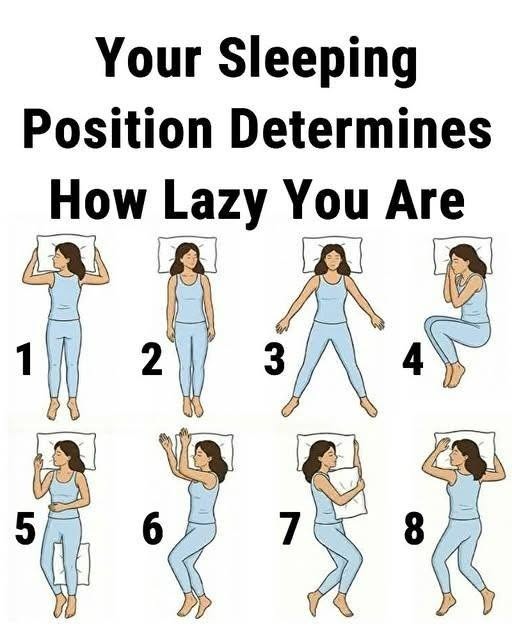
About 95% of people sleep in one of four positions. Here’s what the research says about each.
1. Side Sleeping (The Most Common – 60-70% of people)
This is the overwhelming favorite. Side sleepers curl up on their left or right side, often with knees bent.
ADVERTISEMENT
What research actually shows: Side sleeping is generally the healthiest position for most people. It reduces snoring (by keeping airways open), improves digestion (especially on the left side), and is recommended during pregnancy.
Personality patterns (weak correlations): Some older studies (mostly from the 1990s-2000s) suggest side sleepers tend to be easygoing, social, and trusting. But these are mild tendencies, not personality diagnoses.
Does this mean you’re lazy? Absolutely not. Most of the planet sleeps on their side. That would imply most humans are lazy, which is absurd.
2. Fetal Position (The Most Popular Side Variation – 40% of people)
This is side sleeping with legs curled up tightly toward the chest. It’s called fetal because it mimics the position of a baby in the womb.
What research actually shows: The fetal position is incredibly common and often indicates a need for comfort or security. People with anxiety or cold sleeping environments prefer this position because it preserves body heat and creates a sense of containment.
Personality patterns (weak correlations): Some researchers suggest fetal position sleepers may be sensitive, introverted, or prone to worry. Again, these are weak patterns, not rules.
Does this mean you’re lazy? No. But if you’re always curling into a tight ball, you might be cold, stressed, or dealing with anxiety. Those are real concerns worth addressing—not character flaws.
3. Stomach Sleeping (The Least Common – 7-10% of people)
This is lying face down, usually with head turned to one side. It’s the least popular position for good reasons.
What research actually shows: Stomach sleeping is generally discouraged by sleep specialists. It strains the neck (because you have to twist your head for hours), flattens the natural curve of the spine, and can cause lower back pain. People with sleep apnea or snoring issues sometimes prefer it because it helps keep airways open—but there are better solutions.
Personality patterns (weak correlations): Some old studies suggested stomach sleepers tend to be more extroverted, bold, or sensitive to criticism. But these studies were small and haven’t been replicated.
Does this mean you’re lazy? The viral articles love to target stomach sleepers as “lazy.” There is zero science behind this. None. Stomach sleeping is simply a comfort preference, often driven by habit or airway anatomy.
4. Back Sleeping (The “Starfish” – 10-15% of people)
This is lying on your back with arms and legs spread out (like a starfish) or close to your sides (the “soldier”).
What research actually shows: Back sleeping is generally good for spinal alignment—if you use a proper pillow. But it can worsen snoring and sleep apnea because gravity pulls soft tissues into the airway. People with acid reflux also tend to avoid back sleeping.
Personality patterns (weak correlations): Some older studies suggested back sleepers may be more confident, reserved, or comfortable in their own space (because the starfish position claims territory). But again, these are loose patterns, not personality tests.
Does this mean you’re lazy? No. But if you’re a starfish sleeper with a partner, they might complain about your sprawl. That’s a relationship issue, not a laziness issue.
Where Does the “Lazy” Myth Come From?
Let me trace the origin of this nonsense so you can stop worrying about it.
Source #1: Misinterpreted Sleep Studies
In the 1990s and early 2000s, a few small studies asked participants about their sleep positions and then gave them personality questionnaires. Researchers found statistically significant correlations—but correlation is not causation. Just because side sleepers scored slightly higher on “easygoing” measures doesn’t mean side sleeping makes you easygoing. It could mean easygoing people prefer that position. Or it could be random chance. These studies were never meant to diagnose personality from sleep position.
Source #2: Self-Help Books and Pop Psychology
Writers looking for catchy content took those small correlations and blew them into personality profiles. Books with titles like “What Your Sleep Position Says About You” sold well because people are curious about themselves. The “lazy” connection appeared somewhere in this chain—probably as a way to make stomach sleepers feel bad (and therefore share the content).
Source #3: Social Media Algorithms
TikTok, Instagram, and Facebook love content that evokes emotion. “If you sleep in the fetal position, you’re secretly anxious” gets shares. “If you sleep on your stomach, you’re lazy” gets comments. Algorithms amplify the most provocative claims, not the most accurate ones.
The bottom line: The “sleep position = lazy” claim has no scientific foundation. It’s entertainment, not evidence.
What Actually Makes Someone Lazy? (A Gentle Reality Check)
Since we’re on the topic, let’s define laziness honestly.
Laziness isn’t a sleep position. It’s not a personality type you’re born with. Laziness, when it exists, is usually:
Persistent avoidance of necessary tasks despite having the ability to complete them
A pattern of choosing the path of least resistance even when effort would lead to better outcomes
Often a symptom of depression, burnout, anxiety, ADHD, or physical illness—not a character flaw
Most people who call themselves “lazy” are actually:
Exhausted (from overwork, poor sleep, or illness)
Overwhelmed (by too many responsibilities with no clear starting point)
Unmotivated (because the task feels meaningless or unrewarding)
Struggling with executive dysfunction (common in ADHD and depression)
If you sleep on your stomach for nine hours and still wake up tired, you’re not lazy. You might have sleep apnea, poor sleep quality, or a medical issue. Get that checked. Don’t blame your character.
What Your Sleep Position Actually Reveals (Real Talk)
Let me give you the honest, evidence-based answer to “what does my sleep position say about me?”
Your Sleep Position What It Actually Reveals
Side (any) You’re like 60-70% of humans. Congratulations on being normal.
Fetal You might be cold, stressed, or seeking comfort. Check your room temperature and stress levels.
Stomach You probably have neck or back pain (or you will eventually). Consider switching positions.
Back (starfish) You don’t share a bed with someone who complains about space. Or you do, and they’re very patient.
That’s it. That’s the list.
see continuation on next page
See more on the next page to continue reading →
ADVERTISEMENT