
ADVERTISEMENT
Step 1: Brown the First Half of the Beef
Heat 1 tablespoon of olive oil in a large pot or Dutch oven over medium-high heat.
Pat the 1½ pounds of beef stew meatdry with paper towels. Removing excess moisture helps the beef brown instead of steam. Season the beef generously with salt and freshly ground black pepper.
Add half of the beef to the pot in a single layer. Do not overcrowd — if the pieces are touching, they’ll steam instead of brown.
ADVERTISEMENT
Brown the beef for about 4 minutes, turning halfway through, until all sides are deeply browned. Transfer the first batch to a plate.
Step 2: Brown the Remaining Beef
Add another ½ tablespoon of oil to the pot. Repeat the browning process with the remaining half of the beef. Transfer this batch to the plate as well.
Why brown in batches?Overcrowding the pot lowers the temperature and prevents browning. Those browned bits (called fond) are packed with flavor. Take the time to do it right.
Step 3: Sauté the Aromatics
Add another 1 tablespoon of oil to the now-empty pot.
Add:
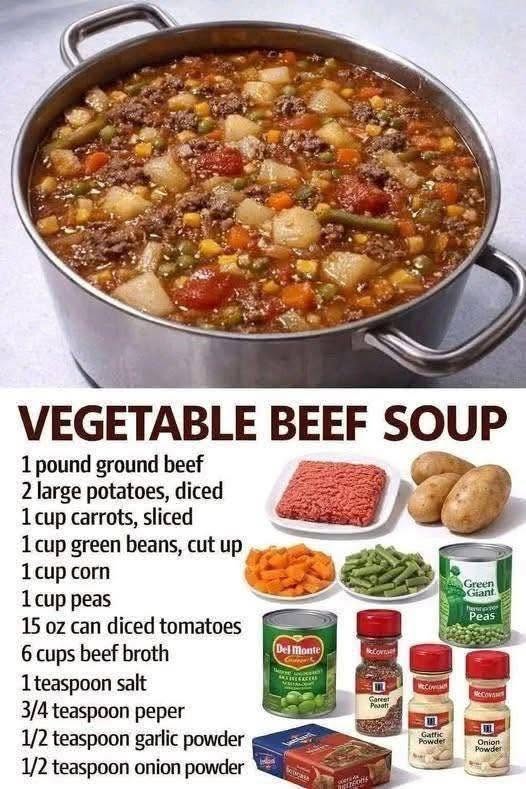
1¾ cups chopped yellow onion
1¼ cups chopped carrots
1 cup chopped celery
Sauté for 3 minutes, stirring occasionally, until the vegetables begin to soften.
Add 1½ tablespoons of minced garlicand sauté for 1 minute longer, until fragrant.
Step 4: Simmer the Broth and Beef
Pour into the pot:
8 cups low-sodium beef or chicken broth
2 cans (14 oz each) diced tomatoes (with juices)
The browned beef (all of it, including any accumulated juices on the plate)
1½ teaspoons dried basil
1 teaspoon dried oregano
½ teaspoon dried thyme
Additional salt and pepper to taste (go easy — you can add more later)
Bring the soup to a boil, then reduce the heat to low. Cover and simmer for 30 minutes, stirring once or twice throughout. This allows the beef to start becoming tender and the flavors to meld.
Step 5: Add the Potatoes
Add 1 pound of chopped potatoes (red or yellow, cut into ¾-inch cubes) to the soup.
Continue to simmer, covered, for 20 minutes.
Note: If you like your green beans very soft, you can add them along with the potatoes now instead of later.
Step 6: Add the Green Beans
Stir in 1½ cups of chopped green beans.
Simmer for 15 minutes longer, or until all of the vegetables and beef are tender. The beef should be fork-tender and the potatoes should be easily pierced with a knife.
Step 7: Add the Frozen Vegetables and Serve
Pour in:
1½ cups frozen corn
1 cup frozen peas
Simmer until heated through, about 5 minutes.
Stir in ⅓ cup of chopped fresh parsley. The parsley adds a bright, fresh finish that balances the rich, savory broth.
Taste and adjust seasoning with additional salt and pepper if needed.
Serve warm, with crusty bread on the side if desired.
Variations & Tips
Make It in the Slow Cooker
Brown the beef and sauté the aromatics as directed (Steps 1–3).
Transfer everything to a 6-quart slow cooker.
Add the broth, tomatoes, dried herbs, and potatoes.
Cook on LOW for 7–8 hours or HIGH for 4–5 hours.
Add the green beans during the last 30 minutes of cooking.
Add the frozen corn, peas, and fresh parsley during the last 5 minutes.
Make It in the Instant Pot
Use the “Sauté” setting to brown the beef and sauté the aromatics.
Add the broth, tomatoes, herbs, and potatoes.
Pressure cook on HIGH for 20 minutes.
Quick release. Add the green beans and pressure cook on HIGH for 5 minutes.
Quick release. Add the frozen corn, peas, and parsley. Let sit for 5 minutes to warm through.
Add More Vegetables
This soup is very forgiving. Try adding:
1 cup chopped zucchini or yellow squash (add with the green beans)
1 cup chopped bell peppers (add with the onions, carrots, and celery)
1 cup chopped kale or spinach (stir in at the very end, just until wilted)
1 cup chopped parsnips (add with the carrots)
Make It with Ground Beef
For a quicker version, brown 1½ pounds of ground beef instead of stew meat. No need to simmer for as long — after adding the broth and vegetables, simmer for 20–25 minutes total.
Make It Spicy
Add ½ teaspoon of red pepper flakes along with the dried herbs
Use hot Italian sausage instead of beef (brown and crumble it)
Add 1 teaspoon of hot sauce at the end
Make It Tomato-Free
If you’re not a fan of tomatoes or have an allergy, omit the diced tomatoes and add an extra 1½ cups of beef broth. The soup will still be delicious — just less acidic.
Make It with Leftover Roast Beef
If you have leftover cooked beef, skip the browning step. Sauté the aromatics, then add the broth, tomatoes, herbs, and chopped cooked beef. Simmer for 30 minutes, then add the vegetables as directed.
Storage & Reheating
Refrigerator: Store leftovers in an airtight container for up to 5 days. The flavors will deepen and improve overnight — this soup is famously better the next day.
Reheating:
Microwave: 2–3 minutes per serving.
Stovetop: Warm over medium heat, stirring occasionally. Add a splash of broth or water if the soup has thickened too much.
Freezing: This soup freezes beautifully for up to 3 months. The potatoes may soften slightly, and the green beans may lose a little texture, but the flavor remains excellent. Freeze in individual portions for easy lunches. Thaw overnight in the refrigerator before reheating.
Frequently Asked Questions (FAQs)
Do I have to brown the beef?
Yes, and don’t skip this step. Browning creates the Maillard reaction — those deep, caramelized flavors that give the soup its richness. If you skip browning, the soup will taste flat and one-dimensional.
Can I use chicken broth instead of beef broth?
Yes. Chicken broth is lighter and slightly less intense, but it works beautifully. Many people actually prefer the cleaner flavor of chicken broth in vegetable beef soup. Use low-sodium.
Why do I need to pat the beef dry?
Moisture is the enemy of browning. Wet beef will steam instead of sear, and you won’t get that beautiful brown crust. Patting the beef dry with paper towels takes 30 seconds and makes a huge difference.
My beef is tough. What went wrong?
A few possibilities:
You didn’t simmer it long enough. Stew meat needs time to break down. Simmer for a full 30 minutes before adding potatoes, then another 30–40 minutes after.
You used a lean cut of beef (like sirloin). Stew meat from the chuck is ideal because it has more marbling.
You simmered at too high a temperature. The soup should be at a gentle simmer, not a rolling boil.
Can I add barley or rice to this soup?
Absolutely. Add ½ cup of pearl barleyalong with the potatoes (it will take about 45 minutes to become tender). For rice, add ½ cup of uncooked white rice during the last 20 minutes of cooking.
Can I make this soup in advance for a party?
Yes, and it’s actually better that way. Make the soup a day or two ahead, refrigerate, and reheat gently before serving. The flavors meld and deepen overnight. Add the fresh parsley just before serving.
Why do I add the frozen corn and peas at the end?
Frozen corn and peas only need to be heated through. If you add them too early, they become mushy and lose their bright color and sweet flavor. Five minutes at the end is plenty.
What to Serve With It
This soup is a complete meal on its own, but here are some classic pairings:
Bread (essential for sopping up the broth):
Crusty French bread or baguette – Tear and dip.
Buttered dinner rolls – Soft and pillowy.
Cornbread – Sweet and crumbly.
Grilled cheese sandwich – Cut into strips for dipping.
Salads:
Simple green salad – With a tangy vinaigrette.
Caesar salad – The creamy dressing contrasts with the brothy soup.
Toppings:
Fresh parsley (already in the recipe)
Freshly grated Parmesan cheese
A dollop of sour cream
A drizzle of hot sauce
Crackers (oyster crackers or saltines)
A Brief History of Vegetable Beef Soup
Vegetable beef soup has been a staple in American kitchens for centuries. Early settlers relied on “humble” soups made from whatever meat and vegetables were available — often the tougher cuts of beef that needed long, slow simmering to become tender.
The addition of tomatoes became common in the late 1800s, as canned tomatoes became widely available. Frozen vegetables (corn, peas, green beans) made the soup possible year-round starting in the mid-20th century.
Today, vegetable beef soup remains a beloved comfort food because it’s adaptable, affordable, and deeply satisfying. Every family has their own version — some with barley, some with okra, some with a secret splash of Worcestershire sauce. This recipe is a classic starting point; make it your own.
Final Thoughts
This Vegetable Beef Soup is exactly what comfort food should be: warm, hearty, nourishing, and deeply satisfying. The tender beef, the rainbow of vegetables, the rich, herb-flecked broth — it all comes together in one pot to create something truly special.
Make it on a cold Sunday afternoon. Make it when you’re feeling under the weather. Make it when you need to feed a crowd on a budget. Or make it just because it’s Tuesday and you want to fill your kitchen with the smell of something wonderful.
This is the kind of recipe that gets passed down. Now it’s yours.
ADVERTISEMENT